

There was one space in our home that quietly stressed me out more than I liked to admit — a bed that slowly disappeared under piles of clean laundry.
It wasn’t messy in the obvious sense, but it was always there, waiting. And the longer I avoided it, the heavier it felt.
Not because the laundry wasn’t clean.
But because it stayed there. Piling up. Turning into something we dug through instead of putting away. And the longer it stayed, the heavier it felt.
To add a bit of context: this isn’t the bed we sleep in. Our master bedroom is on the ground floor, while upstairs we have three bedrooms and a bathroom. Our children are still small, so we sleep with them in their rooms upstairs. That makes this particular room easy to overlook — until the laundry pile grows too big to ignore.
For a long time, I blamed myself for not “just dealing with it.” But what I eventually realized was that I didn’t need more motivation. I needed a clear, gentle starting point.
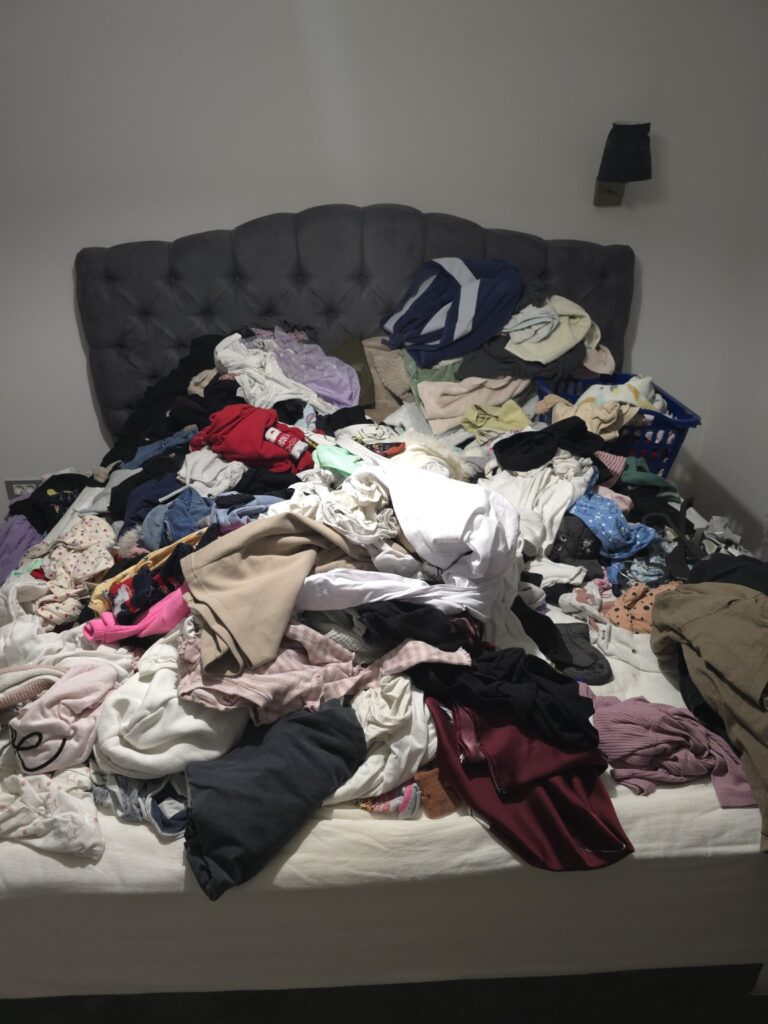
Before: clean laundry that slowly took over the room.
Creating the right atmosphere first
Before touching the laundry, I did something small but important: I looked for music that would help me focus without rushing me.
After a few tries, I found a calm cleaning playlist that made me feel grounded and present. That sense of calm turned out to be just as important as any organizing step that followed.
Getting everything off the bed
The first concrete step was simple: clear the bed completely.
I grabbed five laundry baskets and sorted everything right away:
- bedding
- children’s clothes
- my husband’s clothes
- my clothes
- unmatched socks (of course)
Seeing the bed empty immediately changed how the room felt — and how I felt.
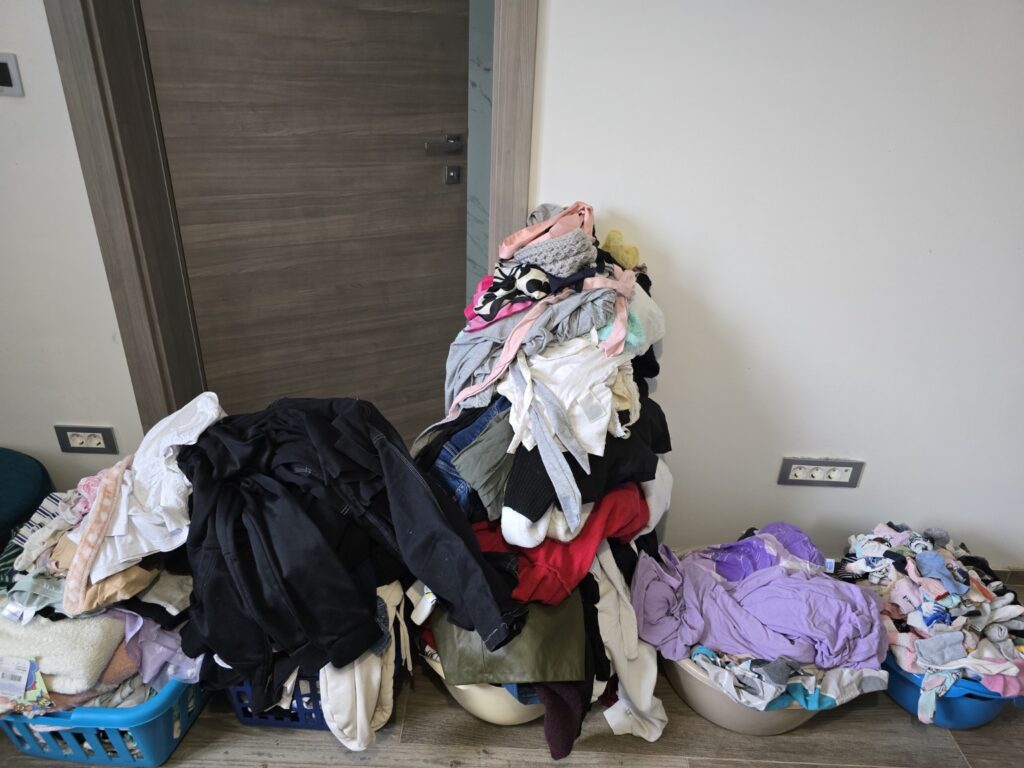
Not pretty, but structured — and that changed everything.
Starting with what gives the fastest results
I began with the bedding, simply because it’s large and gives quick visual results.
I ironed the duvet covers, folded the rest, and put everything away. That alone freed up one basket, which I then dedicated to clothes that needed ironing later — not today.
That decision mattered. It turned the task from overwhelming into manageable.
Moving through the rest, one basket at a time
Next came the children’s clothes. Most of it could be folded and put away immediately, with just a few pieces set aside for ironing.
Then I moved on to my husband’s clothes. Quite a bit went into the ironing basket — mostly shirts and polos that had been sitting in the pile for a while. The rest went back into the wardrobe.
Last was my own clothes. Again, most could be folded and put away, with a smaller portion left for ironing.
And then I stopped.
Knowing when to stop is part of the process
At the end, only two baskets remained:
- one with clothes for ironing
- one with unmatched socks
Everything else was back in the wardrobes.
The bed was clear, made, and calm again.
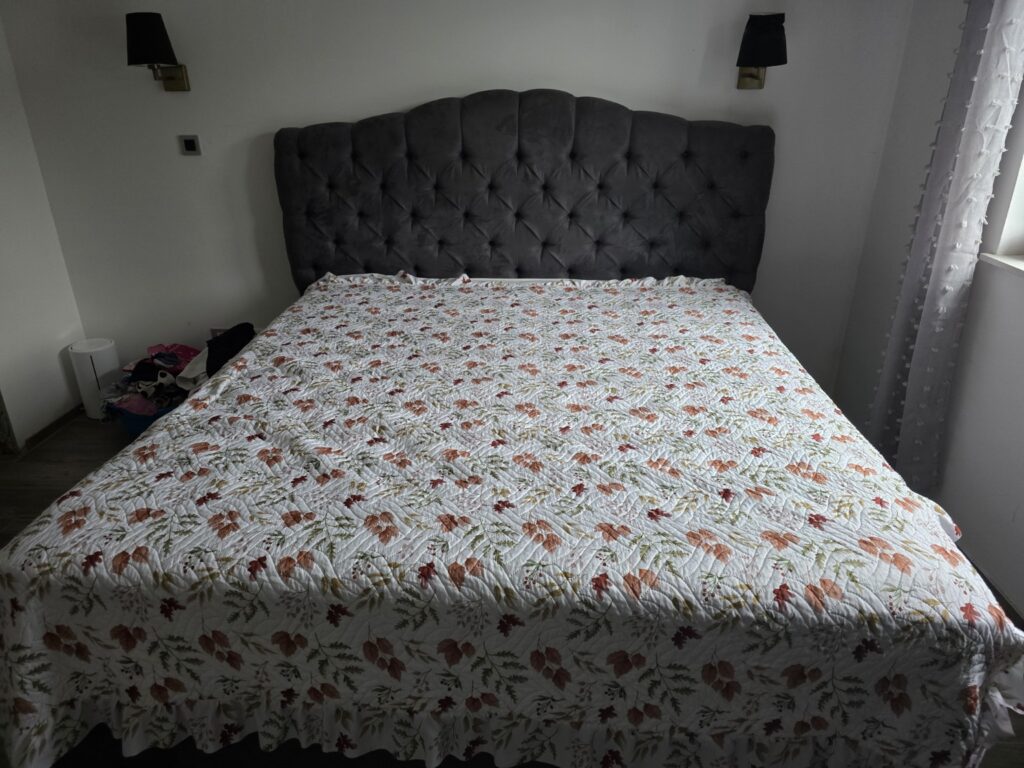
After: a clear bed and a calmer room.
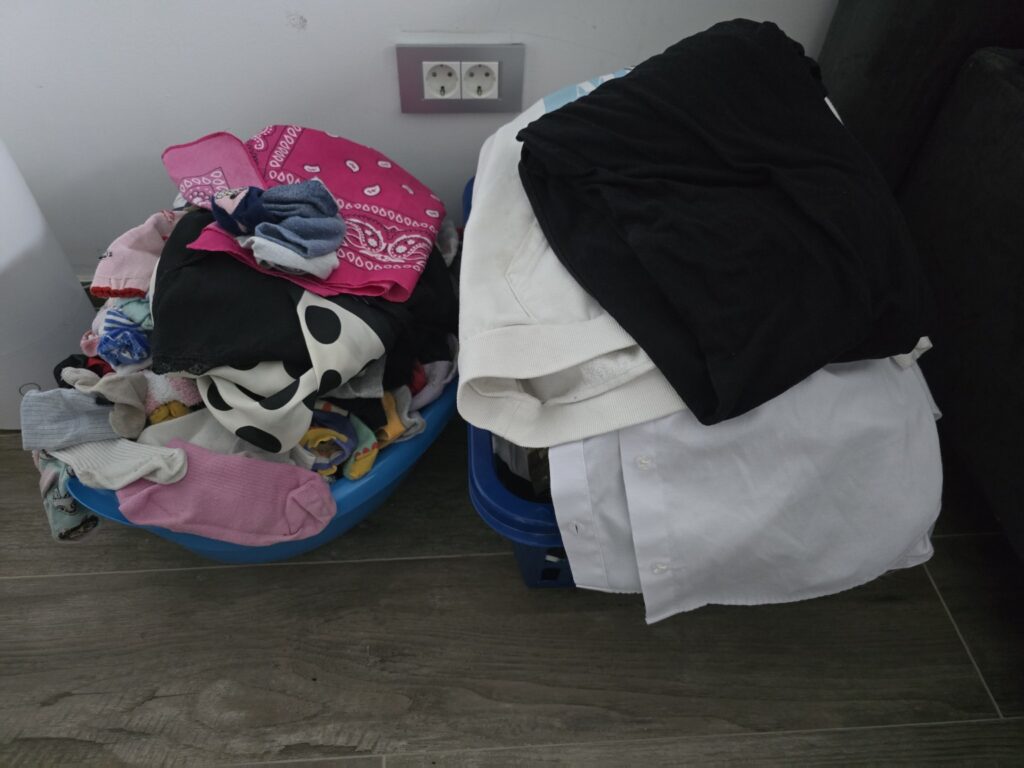
What was left — one basket for ironing and one for unmatched socks. And that was enough for today.
The whole process took somewhere between 60 and 90 minutes.
I didn’t finish everything — but I finished the part that mattered most.
Sometimes progress looks quieter than we expect.
Not everything has to be finished to feel lighter. Creating even a small sense of order can change how a space — and a day — feels.
Leave a Reply